

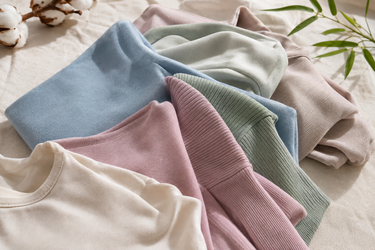
Choosing the Right Knit Structure for Sustainable Clothing
For most sustainable clothing brands, jersey knit fabric is the practical choice for lightweight basics, rib knit fabric works best when stretch and recovery matter, and interlock knit fabric is preferable when a smoother, more stable, premium hand feel is needed. The right structure, however, depends on more than appearance: fiber selection, garment use, durability, comfort, and production cost all need to be considered together.
Knit structure determines how yarns are looped into fabric, which directly affects stretch, recovery, thickness, drape, and dimensional stability. For brands developing sustainable knitwear, understanding these differences before sampling can reduce unnecessary revisions and help match the fabric to the finished garment.
Understanding Jersey, Rib and Interlock Knit Fabrics
Among the main types of knit fabric for clothing, jersey, rib, and interlock are particularly relevant to everyday apparel. Although all three are knitted structures, their construction gives them noticeably different performance characteristics.
Jersey knit fabric is generally lightweight, flexible, and comfortable against the skin. Its relatively simple construction makes it widely suitable for T-shirts, pajamas, babywear, and other everyday garments. It can provide a soft drape while retaining enough stretch for relaxed silhouettes.
Rib knit fabric is constructed with alternating knit and purl columns, creating visible vertical ribs. This structure allows greater widthwise stretch and recovery, making rib knit fabric useful for cuffs, neckbands, fitted tops, babywear, and garments where close-to-body comfort is important.
Interlock knit fabric uses two sets of needles to create a more balanced double-knit structure. Compared with a lightweight jersey, interlock knit fabric is usually thicker, smoother, and more stable. It can therefore work well for premium basics, children's garments, and loungewear that need a substantial hand feel without becoming rigid.
| Knit structure | Main characteristics | Typical applications |
|---|---|---|
| Jersey | Lightweight, flexible, soft drape | T-shirts, pajamas, babywear |
| Rib | Stretchy, resilient, body-hugging | Cuffs, tanks, fitted garments |
| Interlock | Smooth, stable, substantial | Premium basics, loungewear, kidswear |
The choice should begin with the garment rather than the fabric trend. A lightweight pajama top does not necessarily benefit from the stability of interlock, while a fitted baby garment may need more recovery than a conventional jersey can provide.
How Bamboo, Organic Cotton and Tencel Perform in Different Knit Fabrics
Fiber and structure should be evaluated as a combination. The same fiber can feel and perform differently when knitted into different structures, so selecting a sustainable fiber alone does not guarantee the desired garment performance.
Bamboo is often selected for its soft hand feel, breathability, and moisture-management properties. In a lightweight jersey, it can create soft pajamas, babywear, and loungewear with a fluid drape. Bamboo-based rib knit fabric can also be useful where additional stretch is desirable, although the final recovery depends on yarn composition and construction.
Organic cotton offers a familiar balance of comfort, breathability, durability, and versatility. Jersey is particularly practical for everyday T-shirts and children's clothing, while interlock can provide greater body and stability. For brands developing sustainable knitwear, organic cotton is also commercially useful because it can serve a broad range of product categories.
TENCEL™ fibers bring another set of characteristics. TENCEL™ Lyocell is known for a smooth hand feel, moisture control, and high tenacity among cellulosic fibers. Its manufacturer states that the Lyocell process recovers more than 99.8% of the solvent used. This makes it an interesting option for premium jersey knit fabric, loungewear, and lightweight garments where softness and moisture management are priorities.
For TENCEL™ Modal, softness and fabric retention after repeated washing are important advantages. A Modal-based rib structure can therefore work well for fitted garments, while jersey remains suitable for softer, more fluid silhouettes.
Sustainability should also be evaluated through sourcing and certification rather than fiber names alone. Textile Exchange reported that global fiber production reached 132 million tonnes in 2024, while 34% of global cotton production came from certified sources. For organic cotton specifically, GOTS Version 8 requires products carrying its “Organic” label grade to contain at least 95% certified organic fibers. These distinctions matter when brands make sustainability claims.
Choosing the Best Knit Structure for Babywear, Loungewear and Basics
Once the fiber has been selected, the next question is how the fabric should behave during everyday use. The appropriate types of knit fabric for clothing can vary considerably between babywear, loungewear, and basic apparel.
Babywear
Baby garments generally need softness, flexibility, and appropriate stretch without excessive weight. Jersey knit fabric is often a practical option for bodysuits, pajamas, and lightweight tops because its flexibility allows easy movement.
For garments that require more stretch around openings or close-fitting areas, rib knit fabric may be more suitable. Its natural elasticity can make dressing easier and improve recovery around necklines and cuffs.
Interlock can be considered when a thicker, smoother fabric is preferred, particularly for cooler-weather babywear. However, its additional weight and material consumption should be evaluated against the intended climate and garment design.
Loungewear
Loungewear generally prioritizes softness, drape, breathability, and freedom of movement. Bamboo and TENCEL™ fibers can perform well in this category when paired with an appropriate knit structure.
A lightweight jersey can create relaxed tops and pajama sets, while interlock knit fabric may be better for structured loungewear that needs greater body and stability. Rib can be useful for fitted lounge pieces or areas requiring additional stretch.
Everyday Basics
Basics such as T-shirts, tanks, and lightweight children's garments need to balance comfort with repeat washing and everyday wear. Organic cotton jersey is a versatile starting point, while TENCEL™ jersey can offer a smoother, more fluid alternative.
For fitted tanks, cuffs, neckbands, and stretch-oriented designs, rib knit fabric provides a different performance profile. Meanwhile, interlock can support premium basics where fabric stability and a more substantial appearance are important.
For sustainable knitwear, the best choice is therefore rarely determined by fiber alone. Product category, climate, target price, fit, washing requirements, and desired hand feel should all be considered during development.
How Knit Fabric Choice Affects Comfort, Durability and Manufacturing Costs
Knit structure influences manufacturing economics as well as the final wearing experience. A heavier structure generally uses more yarn per unit of fabric, while additional material weight can affect cutting efficiency, shipping weight, and garment cost.
Jersey knit fabric is often attractive for large-volume basics because its relatively straightforward construction can support efficient production. However, lightweight jersey may require greater attention to dimensional stability, twisting, or edge curling depending on fiber and finishing.
Rib knit fabric can provide useful stretch without relying entirely on elastane, but its higher stretch and recovery characteristics need to be matched with the garment pattern. Poor compatibility between fabric recovery and garment dimensions can lead to fit problems after repeated wear.
Interlock knit fabric generally offers greater stability and a smoother surface, but its double-knit construction can increase fabric weight and production costs. It may therefore make more commercial sense for higher-value garments than for low-cost lightweight basics.
Comfort and durability should also be assessed together. A very soft fabric may be attractive at the sampling stage but unsuitable if it loses shape quickly. Conversely, a highly durable structure may not provide the lightweight drape consumers expect from summer loungewear.
A useful development process is to evaluate each candidate fabric against four criteria:
- Comfort: softness, breathability, moisture management, and stretch.
- Durability: abrasion resistance, recovery, shrinkage, and pilling performance.
- Manufacturing: fabric weight, cutting efficiency, sewing requirements, and quality consistency.
- Commercial fit: material cost, target retail positioning, order quantity, and expected product lifespan.
This approach is particularly important for brands producing sustainable knitwear, because sustainability is not simply a matter of choosing a fiber with an environmentally preferable reputation. A fabric that performs well throughout its intended service life may provide better product value than one selected solely for its marketing appeal.
A Practical Selection Framework
For a brand deciding among the three main structures, the following approach is a useful starting point:
Choose jersey when softness, flexibility, lightweight comfort, and drape are the primary requirements.
Choose rib when stretch and recovery are central to the garment, particularly around fitted sections, cuffs, necklines, or close-fitting designs.
Choose interlock when greater stability, smoothness, and fabric body are more important than minimum weight or cost.
The final decision should still be confirmed through sampling and testing. Actual performance depends on yarn count, fiber blend, knitting parameters, finishing, garment construction, and laundering conditions—not just the structure name.
Conclusion
Choosing among jersey knit fabric, rib knit fabric, and interlock knit fabric requires a product-specific assessment of fiber, structure, comfort, durability, and production economics. For brands developing bamboo, organic cotton, and TENCEL™ apparel, matching the knit structure to the garment's intended use can create a more reliable balance between sustainability and performance.
For brands that need support with sustainable knitwear development, Ecoenfam provides OEM/ODM apparel manufacturing and currently offers knitted products including baby and children's knitwear, supported by sustainable material options and quality-controlled production.
It is possible that you also want to know:
How to Develop a Sustainable Knitwear Collection with Bamboo and Organic Cotton
Exploring Ecocosy and Eco-Friendly Materials for Clothing Manufacturing
Zhuhai Enzhuo Clothing Co., Ltd.

Contact: Yinger (General Manager)
@ 2026 Ecoenfam Apparel