

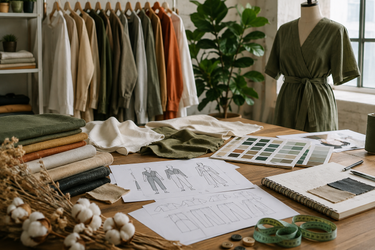
How Fashion Brands Develop Sustainable Clothing Collections from Concept to Production
Building a successful sustainable clothing collection requires more than selecting eco-friendly materials. Brands need a structured approach that combines market research, thoughtful design, clothing product development, responsible sourcing, rigorous testing, and reliable manufacturing. Working with experienced sustainable clothing manufacturers and a capable custom clothing manufacturer helps reduce development risks, improve product quality, and create collections that meet both consumer expectations and sustainability goals.
According to the United Nations Environment Programme (UNEP), the fashion industry is responsible for a significant share of global greenhouse gas emissions and resource consumption. At the same time, consumer demand for environmentally responsible apparel continues to increase, making sustainability an important business strategy rather than simply a marketing trend. Brands that integrate sustainability into every stage of clothing product development are better positioned to build long-term customer trust and product value.
How to Plan a Sustainable Clothing Collection Strategy
A sustainable collection begins with a clear product strategy instead of selecting fabrics first. Before sketching designs, brands should identify their target customers, pricing position, seasonal goals, and sustainability objectives.
Many successful private label clothing brands start by defining measurable targets, such as reducing virgin polyester usage, increasing biodegradable materials, or improving product durability. These objectives influence every decision during clothing product development, from fabric sourcing to production planning.
A practical planning process usually includes:
- Defining the target customer profile and purchasing behaviors.
- Researching fashion trends alongside sustainability expectations.
- Determining suitable product categories such as casual wear, knitwear, family apparel, or accessories.
- Establishing sustainability standards, certifications, and material requirements.
- Creating a realistic development timeline with prototype milestones.
Planning also requires balancing creativity with manufacturing feasibility. An experienced custom clothing manufacturer can provide early technical feedback, helping designers avoid styles that are difficult or unnecessarily expensive to produce.
Rather than developing dozens of products simultaneously, many brands launch smaller capsule collections first. This approach simplifies clothing product development, allows faster market validation, and minimizes inventory waste before expanding into larger product lines.
Choosing Sustainable Fabrics for Different Clothing Categories
Material selection is one of the most important decisions throughout clothing product development because fabric directly influences comfort, durability, environmental impact, and production efficiency.
Different clothing categories require different performance characteristics, making it essential to match sustainable fabrics with their intended applications instead of relying on a single material for every product.
| Clothing Category | Recommended Sustainable Fabrics | Key Benefits |
| Everyday Apparel | Organic Cotton, TENCEL™ Lyocell | Soft, breathable, moisture management |
| Knitwear | TENCEL™ Modal, Organic Cotton Blends | Stretch, comfort, shape retention |
| Family Matching Collections | Organic Cotton, Bamboo Blends | Gentle on skin, comfortable for all ages |
| Bedding | Lyocell, Bamboo, Organic Cotton | Temperature regulation and softness |
| Fashion Accessories | Recycled Fibers, Hemp Blends | Durability with lower environmental impact |
Many sustainable clothing manufacturers now offer a wider selection of renewable and biodegradable textiles than ever before. Materials such as TENCEL™ Lyocell are produced using responsibly sourced wood pulp and efficient closed-loop manufacturing processes, while organic cotton reduces reliance on conventional agricultural chemicals.
However, sustainability extends beyond the fiber itself. Brands should also evaluate:
- Fabric certifications such as OEKO-TEX®, GOTS, or FSC-supported supply chains where applicable.
- Dyeing and finishing processes.
- Material traceability.
- Fabric durability after repeated washing.
- Long-term product lifespan.
Working closely with a knowledgeable custom clothing manufacturer allows brands to compare multiple fabric options before finalizing material selections. This collaboration often reduces costly revisions later in clothing product development.
Choosing fabrics also affects production efficiency. Some premium sustainable materials require different sewing parameters, washing methods, or finishing techniques, making early communication between designers and manufacturers particularly valuable.
Clothing Product Development: Sampling, Prototyping and Testing
After material selection, the focus shifts toward practical clothing product development.
This stage transforms design concepts into physical products while identifying potential quality or manufacturing issues before mass production begins.
A typical clothing product development workflow includes:
Initial Sample Development
The first sample verifies basic design appearance, garment construction, measurements, and fabric compatibility. Designers often adjust fit, seam placement, trims, or stitching after reviewing the initial sample.
Prototype Optimization
Once the first sample is approved, additional prototypes improve functionality, comfort, and production efficiency.
At this stage, manufacturers may recommend:
- Simplifying construction without changing appearance.
- Improving stitching strength.
- Reducing unnecessary fabric waste.
- Optimizing production processes.
These refinements help prepare products for larger-scale manufacturing while maintaining design integrity.
Performance Testing
Reliable sustainable clothing manufacturers conduct various quality evaluations before production, including:
- Fabric shrinkage testing.
- Colorfastness assessment.
- Seam strength verification.
- Dimensional stability.
- Wear and wash performance.
Testing is particularly important for children's clothing, knitwear, bedding, and active apparel because these categories experience frequent washing and extended daily use.
Rather than treating testing as a final inspection, leading manufacturers integrate quality control throughout the entire clothing product development process. Early testing significantly reduces production defects and costly post-production corrections.
Brands developing private label clothing collections also benefit from reviewing packaging, labeling, care instructions, and compliance requirements during this stage, ensuring products are retail-ready before manufacturing begins.
Moving from Small Batch to Bulk Clothing Manufacturing
Many emerging brands begin with limited production runs before transitioning into larger manufacturing volumes. This gradual approach reduces inventory risk while providing valuable customer feedback.
Moving from small batches to bulk production involves much more than increasing order quantities. Manufacturing consistency becomes increasingly important as production scales.
Several operational factors should be carefully managed:
- Standardized production specifications.
- Stable fabric sourcing across multiple production runs.
- Consistent sizing and grading.
- Quality control checkpoints.
- Reliable delivery scheduling.
Experienced custom clothing manufacturers typically establish standardized operating procedures to ensure garments remain consistent across different production batches.
For growing private label clothing businesses, selecting manufacturing partners capable of scaling production without sacrificing quality is a major competitive advantage.
Close communication between brands and sustainable clothing manufacturers also improves forecasting accuracy. Manufacturers can recommend practical minimum order quantities, production scheduling, and material purchasing strategies that help brands avoid overproduction while maintaining supply continuity.
Many manufacturers now provide integrated services beyond sewing alone, including material sourcing, pattern development, technical support, packaging, and logistics coordination. These end-to-end capabilities simplify clothing product development, especially for startups entering sustainable fashion for the first time.
Long-term collaboration also allows manufacturers to accumulate technical knowledge about a brand's preferred fabrics, sizing standards, and quality expectations. Over multiple production cycles, this often results in faster development timelines, improved consistency, and lower operational costs.
Final Thoughts
Creating a successful sustainable clothing collection requires careful planning from concept through manufacturing. Every stage—including strategy development, material selection, clothing product development, sampling, testing, and production—contributes to the final product's quality, environmental performance, and commercial success.
Brands that collaborate with experienced sustainable clothing manufacturers and an established custom clothing manufacturer are better equipped to manage technical challenges while building reliable private label clothing collections that meet modern consumer expectations.
For brands seeking a manufacturing partner with experience across eco-friendly apparel, knitwear, family collections, bedding, and accessories, EcoEnfam offers integrated clothing product development and manufacturing services that support sustainable product creation from design through production.
It is possible that you also want to know:
How to Develop a Sustainable Knitwear Collection Guide
Organic Cotton Clothing Manufacturers: How to Choose
Zhuhai Enzhuo Clothing Co., Ltd.

Contact: Yinger (General Manager)
@ 2026 Ecoenfam Apparel