

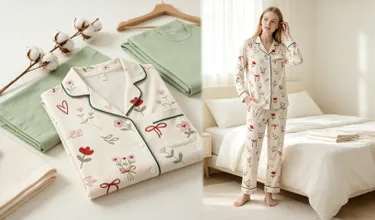
How to Develop a Bamboo Pajama Collection for Private Label Brands
Bamboo pajamas have become one of the fastest-growing categories in sustainable sleepwear, and private label brands are increasingly turning to bamboo fabric to build differentiated, comfort-driven collections.
This guide covers why bamboo pajamas are gaining momentum, how to select the right fabric for different styles and seasons, and how to develop a full collection across women's, men's, kids', and baby sleepwear with a bamboo pajama manufacturer.
Sleepwear has quietly become one of the most competitive categories in the apparel industry. Consumers are no longer satisfied with basic cotton pajama sets—they want fabrics that feel luxurious, regulate temperature, and align with their values around sustainability. This shift has pushed many private label brands toward bamboo pajamas as a way to stand out in a crowded market.
For brands exploring product development for the first time, understanding how bamboo pajamas are designed, sourced, and manufactured is the first step toward building a collection that resonates with customers and performs well commercially.
Why Bamboo Pajamas Are a Growing Category for Private Label Brands
Search interest and retail demand for bamboo pajamas have risen steadily over the past several years, driven by consumers seeking softer, more breathable alternatives to traditional cotton sleepwear. Several factors explain this growth.
| Driver | Impact on Private Label Brands |
|---|---|
| Comfort expectations | Consumers associate bamboo with silk-like softness, increasing perceived product value |
| Sustainability positioning | Bamboo supports eco-friendly brand narratives without requiring a full product overhaul |
| Category crossover | Bamboo pajamas work across gifting, loungewear, and family matching segments |
| Repeat purchase potential | Sleepwear has strong reorder rates once a brand earns customer trust |
Unlike some sustainable materials that require significant consumer education, bamboo pajamas sell themselves largely on comfort. Shoppers who try a bamboo sleep set often return specifically for the fabric feel, which gives private label brands a natural path to repeat purchases and brand loyalty.
This category also benefits from strong visual merchandising potential. Bamboo pajamas photograph well for e-commerce and social media, and they pair naturally with gifting occasions such as holidays, baby showers, and family matching campaigns—all of which support marketing efforts beyond the product itself.
Choosing Bamboo Fabrics for Different Pajama Styles and Seasons
Not all bamboo fabric performs the same way, and selecting the right construction is essential when developing a private label pajama collection.
Bamboo fabric weights and blends commonly used in sleepwear include:
- Lightweight bamboo viscose (single jersey) – ideal for warm-weather pajamas, short-sleeve sets, and shorts
- Bamboo rib knit – offers a closer, more structured fit, often used for fitted pajama tops
- Bamboo fleece or brushed bamboo blends – suited to cooler-season sleepwear and long-sleeve sets
- Bamboo-spandex blends (typically around 95% bamboo viscose and 5% spandex) – improve stretch recovery and shape retention for everyday wear
Seasonality plays a direct role in fabric selection. A collection designed for year-round retail typically needs at least two weight variations: a lightweight option for spring and summer, and a heavier brushed or fleece-style bamboo fabric for fall and winter. Brands launching their first bamboo pajamas program often start with a single core weight before expanding into seasonal variations once demand is validated.
Print and color application also affects fabric choice. High-definition digital printing works particularly well on bamboo viscose, allowing brands to introduce seasonal patterns, holiday prints, or family matching designs without compromising the fabric's softness or breathability.
Developing Bamboo Pajamas for Women, Men, Kids and Babies
One advantage of bamboo pajamas as a private label category is that the fabric performs consistently well across age groups, making it possible to build a coordinated, multi-segment collection.
Bamboo Pajamas for Women
Bamboo pajamas for women are typically developed as two-piece sets, nightgowns, or robe-and-set combinations. Fit details such as adjustable waistbands, relaxed silhouettes, and breathable rib trims are common priorities, since comfort remains the primary purchase driver in this segment.
Bamboo Pajamas for Men
For men, bamboo pajama sets are usually structured with a slightly firmer hand feel and simplified design details, often featuring crew neck or button-front tops paired with straight-leg pants. Durability in high-friction areas such as underarms and inner thighs should be considered during fabric and construction selection.
Bamboo Pajamas for Kids
Bamboo pajamas for kids need to balance softness with practicality. Features such as flat seams, tagless labels, and reinforced stitching at stress points help improve durability for active wear, while the natural breathability of bamboo fabric supports comfortable sleep for children with sensitive skin.
Bamboo Pajamas for Babies
Baby sleepwear places the highest priority on skin safety and fabric certification. Bamboo's natural antibacterial properties and soft hand feel make it a popular choice for infant sleep sets, swaddles, and rompers, particularly when paired with OEKO-TEX certified fabric sourcing.
Developing across all four segments at once is not necessary for every brand. Many private label pajama programs begin with one core demographic—often women's or kids'—before expanding into family matching sets once the initial collection proves successful in the market.
Working with a Bamboo Pajama Manufacturer for Private Label Production
Once fabric and target segments are defined, the next step is selecting a bamboo pajama manufacturer capable of supporting private label production from sampling through bulk delivery. A few factors typically determine how smoothly this process goes.
Key considerations when evaluating a manufacturer:
- Fabric sourcing and certification – confirm access to certified bamboo fabrics such as OEKO-TEX or GOTS-compliant materials
- MOQ flexibility – lower minimums allow brands to test styles before committing to larger production runs
- Sampling turnaround – faster sample development shortens the overall product development timeline
- Print and trim customization – digital printing capability and quality trims (such as two-way zippers or reinforced elastic) affect finished garment quality
- Quality control process – multi-stage inspection reduces the risk of defects reaching bulk production
Brands developing their first bamboo pajamas program often benefit from working with a manufacturer that offers full OEM/ODM support, since this allows design, fabric selection, and packaging to be handled under one coordinated process rather than through multiple disconnected vendors. For guidance on selecting fabric types before development begins, brands can also review this comparison of the best fabrics for pajamas and sleepwear, which outlines how bamboo compares to cotton, modal, and other common sleepwear materials.
Understanding the full range of sleepwear styles available is equally useful when scoping a new collection—brands unfamiliar with current market segmentation may find it helpful to reference this complete guide to pajama and sleepwear styles before finalizing product specifications.
Conclusion
Bamboo pajamas offer private label brands a practical way to enter the sustainable sleepwear market with a product that performs well on comfort, sustainability positioning, and repeat purchase potential. Success in this category depends on selecting the right fabric weight for each season, tailoring fit and construction across women's, men's, kids', and baby segments, and partnering with a manufacturer equipped to manage certification, sampling, and quality control.
At Ecoenfam, we work with private label brands to develop bamboo pajama collections from initial fabric selection through bulk production, offering certified eco-friendly fabrics, low MOQ sampling, and full OEM/ODM support. Whether you're launching your first bamboo pajamas line or expanding an existing sleepwear collection, our team can help bring your designs to market efficiently.
It is possible that you also want to know:
Zhuhai Enzhuo Clothing Co., Ltd.

Contact: Yinger (General Manager)
@ 2026 Ecoenfam Apparel